Admin
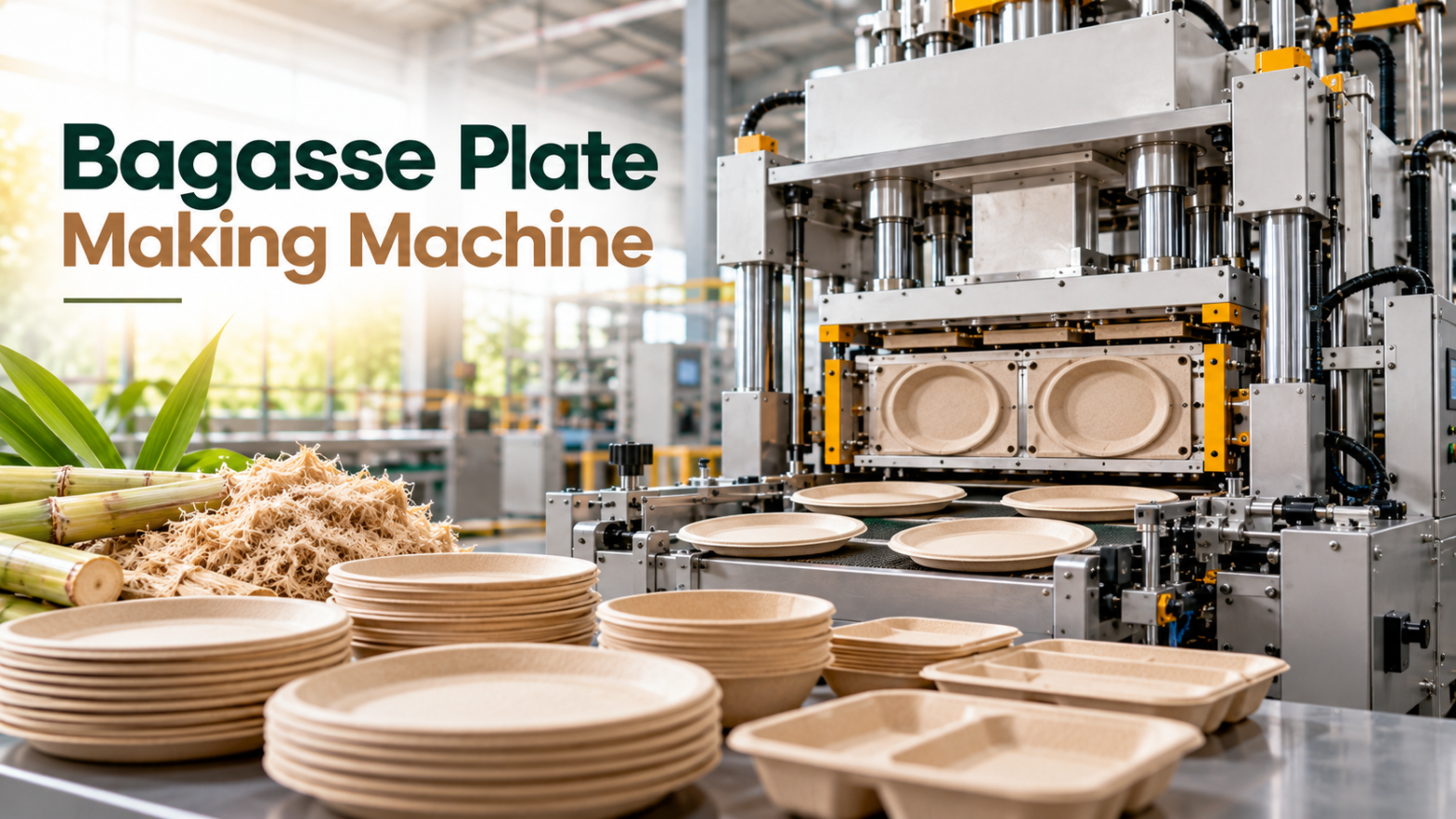
Searching for a bagasse plate making machine turns up listings that describe two very different technologies under one name. Buy the wrong type and the equipment may be unable to process bagasse at all. This guide explains how pulp molding technology forms plates from fibre slurry, how it differs from a conventional paper plate making machine, and what to check on capacity, price and suppliers. It separates general industry guidance from confirmed specifications published for Prosper Universal’s pulp molding machine range, which lists round plates among its products.
What Is a Bagasse Plate Making Machine?
Bagasse is the fibrous residue left after juice is extracted from sugarcane. A bagasse plate making machine is not one unit but a pulp-moulding line. It prepares bagasse fibre into a wet slurry, forms plates on perforated moulds using vacuum, then presses and dries them under heat. Trimming and stacking follow.
A complete line therefore has three groups of equipment: a pulping and refining section, a forming and hot-press machine, and utilities such as vacuum, compressed air and a heating system.
How Pulp Molding Technology Produces Plates
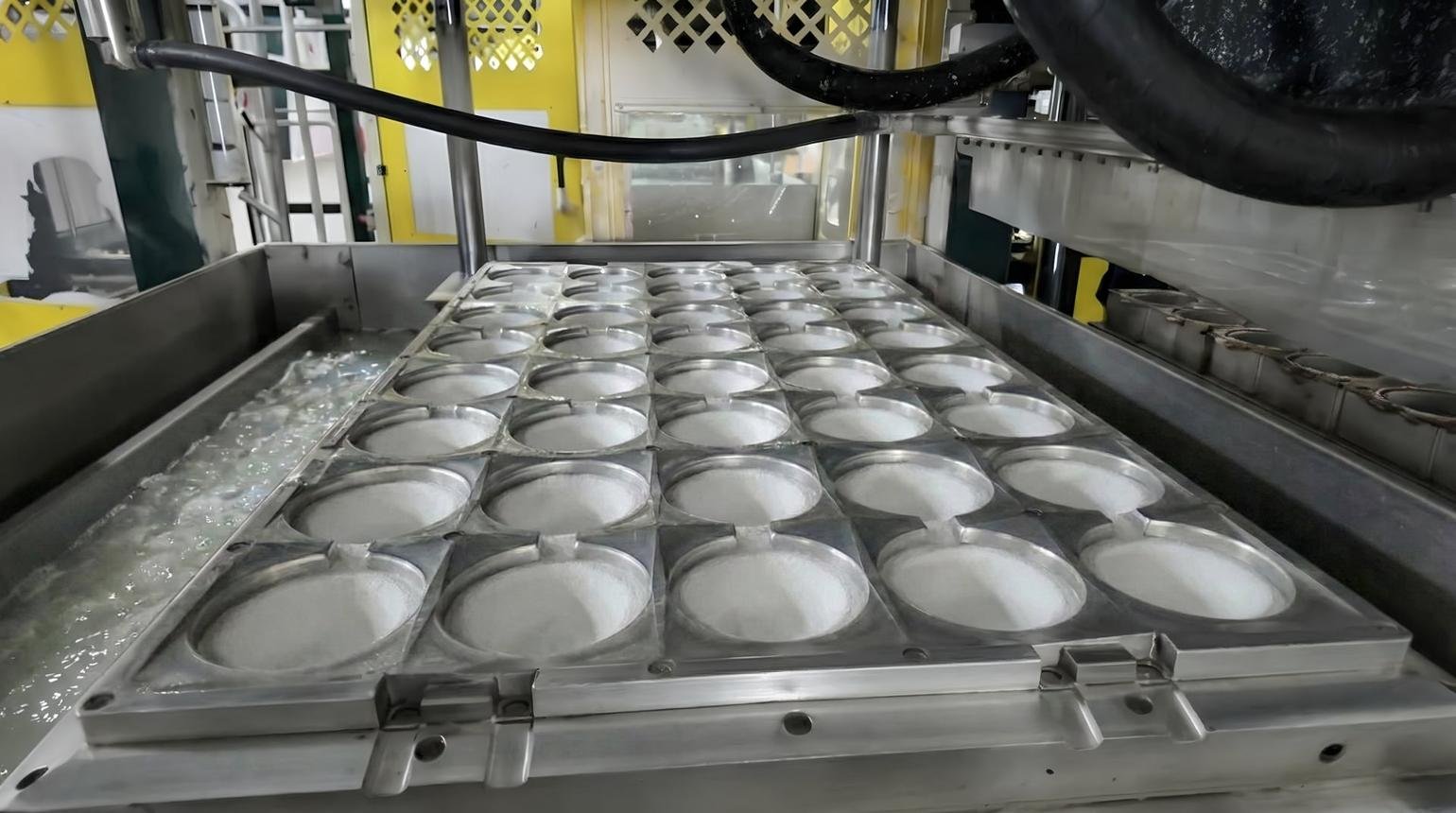
The stages below are general industry practice. Exact equipment varies between production lines.
| Stage | What happens | Buyer consideration |
| Fibre preparation | Bagasse is slurried, cleaned, refined and set to a target consistency | Contaminant removal, refiner capacity |
| Forming | Vacuum draws fibre onto a perforated mould as water drains | Mould quality, vacuum capacity |
| Hot pressing | Heated moulds press and dry the wet plate, setting shape and surface | Heating method, pressure, cycle time |
| Trimming and stacking | Edges are cleaned, then plates are counted and stacked | Automation level, labour |
Prosper Universal’s pulping process guide explains pulping, cleaning, refining and consistency control in more detail. Its pulping system page shows a double disc refiner, a vacuum pump with tank and a screw air compressor, and pulping lines described at 6, 10 and 30 tons per day.
Paper Plate Making Machine vs Pulp Molding Line
A paper plate making machine, in the usual sense, presses pre-cut paper or paperboard blanks between heated dies. It never handles slurry. A pulp-moulding line starts from fibre in water. The two are not interchangeable, and a machine sold as a paper plate making machine cannot be assumed to process bagasse pulp.
| Feature | Paper plate pressing machine | Pulp-moulding line |
| Feedstock | Pre-cut paper or board blanks | Fibre slurry |
| Forming method | Heated die pressing | Vacuum forming, then hot pressing |
| Needs a pulping section | No | Yes |
| Bagasse suitability | Not by itself | Possible, if the manufacturer confirms |
This table is general industry guidance. Prosper Universal’s paper cutlery machine line is a third category: it laminates and forms paper rather than moulding slurry, so it is not evidence of plate-forming capability. A “biodegradable plate making machine” is likewise a marketing label. It says nothing about what fibre the machine can process, or whether the finished plate will meet any compostability standard.
Raw Material: Bagasse Compared With Conventional Paper Feedstock
Conventional paper feedstock is usually a cleaner, more uniform fibre supply. Bagasse is an agricultural residue, so fibre quality can vary with source and storage, and it needs careful cleaning and refining before moulding. Fibre form also changes the line design: bagasse supplied as dry pulp board or sheet must be re-pulped, while wet bagasse needs washing and cleaning first.
Prosper Universal’s process guide lists bagasse among materials usable in appropriate pulp manufacturing systems. That statement is general. It does not confirm that any specific model processes bagasse, so before ordering a bagasse plate making machine, ask the supplier to confirm your fibre form in writing and to test it.
Bagasse Plate Making Machine Capacity and Specifications
Prosper Universal publishes these figures for two fully automatic pulp molding models. Its page does not state bagasse compatibility for them, so treat the figures as general machine data.
| Specification | BPMRT-8012 | BPMDH-8012 |
| Mould size | 800 × 1200 mm | 800 × 1200 mm |
| Published capacity | Up to 100–500 kg per 24 hours, depending on product | Up to 1,000–1,200 kg per 24 hours, depending on product |
| Forming | Rotary and reverse forming | Rotary and reverse forming |
| Heating | Electric or thermic oil | Synchronized two-side heating |
| Product depth | Up to 100 mm | 90–100 mm |
| Approx. weight | About 6 tons | About 12 tons, excluding mould |
| Dimensions | L 3610 × W 2080 × H 2500 mm | L 6000 × W 2250 × H 2540 mm |
| Listed products | Round plate, coffee cup lid, pizza box, clamshell, industrial packaging | Round plate, round and square bowls, compartment trays |
| Notable features | PLC with HMI, quick-change moulds, automatic oil-grease system | Automatic stacking and product counting |
Capacity is quoted in kilograms, not plates. The number of plates depends on plate weight, so ask for pieces per hour for your plate size. Treat the upper figure as a maximum under suitable conditions, not saleable output. Fibre properties, mould design, drying capacity, pressing settings and downtime all reduce it. Power load, heating-medium consumption, vacuum and air requirements are not published on the product page, so request them in writing.
Applications and Product Quality
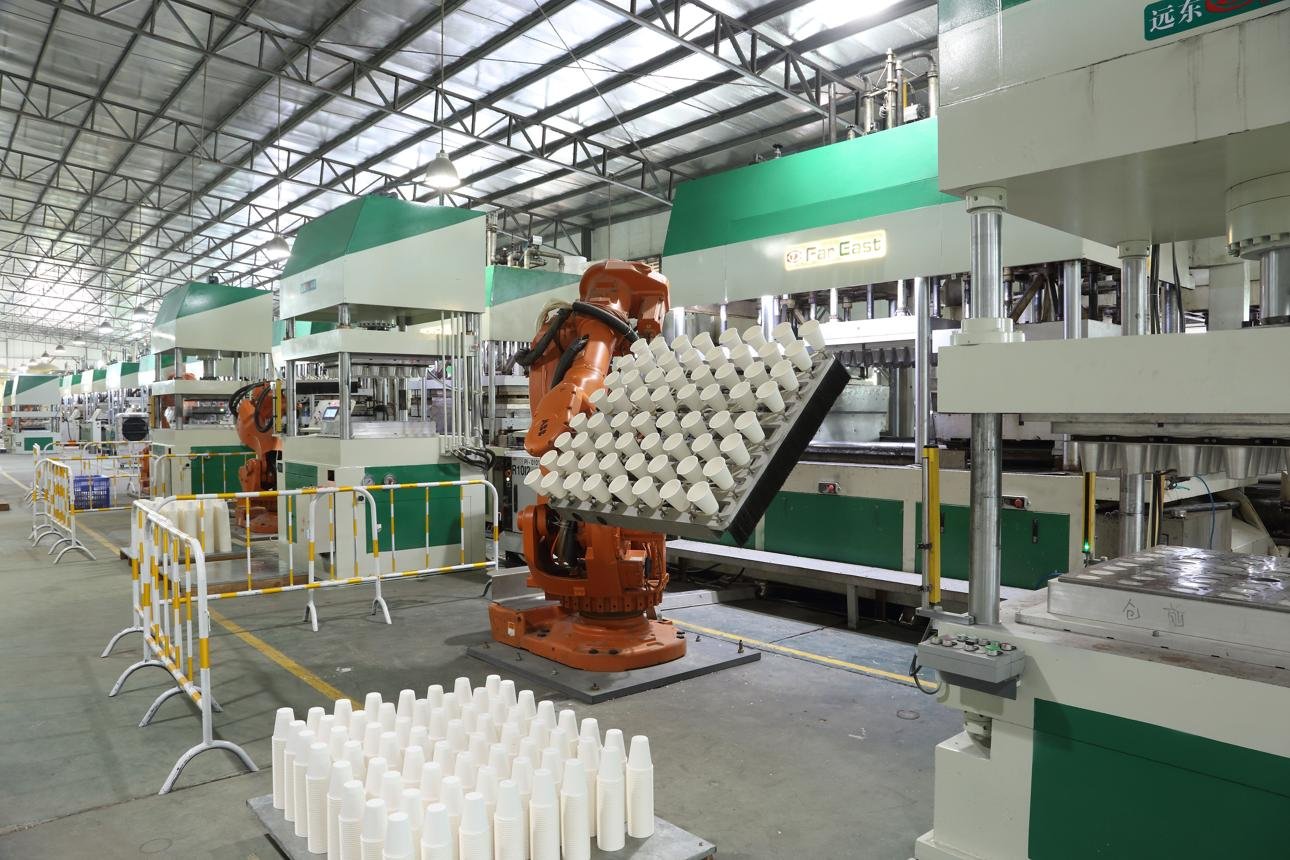
Fibre plates serve takeaway food, catering and retail, and the same moulding technology can form bowls, trays and lids. Quality depends on controllable factors: clean, evenly refined pulp gives consistent wall thickness; accurate moulds and vacuum holes give clean edges; stable pressing temperature and pressure set the surface and strength; and complete drying prevents distortion in storage. Any coating or barrier treatment for oily foods needs its own testing and affects compostability claims.
Bagasse Plate Making Machine Price and Operating Costs
Searches for paper plate making machine price mix pressing machines and pulp-moulding lines, which cost very different amounts. Prosper Universal does not publish prices, so request a written quotation. Compare scope, not just the headline number: pulping and refining equipment, moulds for each plate design, vacuum and compressed-air supply, heating utilities, foundation and installation, effluent handling, and operator training.
Running costs include fibre, electricity or thermic-oil heating, water, mould maintenance, labour and spares. Drying is usually among the more energy-intensive steps, so ask for measured consumption on your product. No payback period can be stated without your own costs, selling prices and utilisation.
Regulation and Product Claims
Interest in fibre plates is linked to restrictions on plastic. A Ministry of Environment, Forest and Climate Change reply in Parliament records that the Plastic Waste Management Amendment Rules, 2021 prohibited identified single-use plastic items, including plates, cups and cutlery, from 1 July 2022. That rule concerns plastic items. It does not certify fibre plates or set a compostability standard for them. Obtain test reports before calling any plate compostable, biodegradable or food-safe.
How to Evaluate a Bagasse Plate Making Machine Supplier
Ask the supplier to put these points in writing:
- Fibre compatibility: which bagasse form is supported, and has it been tested?
- Trial: can your pulp be formed into your plate size before you order?
- Output: pieces per hour and kg per day for your plate weight.
- Pulping section: capacity, cleaning and refining that match the moulding line.
- Moulds: design, machining, lead time and cost per plate shape.
- Utilities: power, heating medium, vacuum, air, water and effluent needs.
- Support: installation, operator training, spares and response time.
Installation and Maintenance
Machine weights of about 6 and 12 tons call for suitable foundations, handling equipment and layout, and the pulping section needs water supply and drainage. Prosper Universal lists an automatic oil-grease system and automatic error indication on its models. Plan scheduled checks of heating, hydraulics and vacuum systems, keep mould vacuum holes clean, screen the pulp for contaminants and stock key spares before commissioning.
Frequently Asked Questions
Can a paper plate making machine process bagasse pulp?
Not on its own. A pressing machine shapes pre-cut blanks and has no forming or pulping stage. Bagasse pulp needs a pulp-moulding line unless the manufacturer states otherwise.
How is a bagasse plate formed?
Prepared pulp is drawn onto a perforated mould by vacuum, which drains the water. The wet plate is then pressed between heated moulds to dry it and set its shape.
What affects the quality of finished plates?
Fibre cleanliness, refining, pulp consistency, mould accuracy, pressing temperature and pressure, and drying all matter. Contaminants in the pulp cause defects and wear on moulds.
Is a bagasse plate automatically compostable?
No. Compostability depends on the fibre, any additives or coatings, and the composting conditions. It must be shown by testing against the standard your market recognises.
Can one line make plates, bowls and trays?
Different moulds can form different shapes. Prosper Universal lists round plates, bowls and compartment trays for the BPMDH-8012, but each shape needs its own mould within the 800 × 1200 mm mould size and the stated product depth.
Does Prosper Universal supply machines for bagasse plates?
Its pulp molding range lists plates and tableware, but the product page does not state bagasse compatibility. Discuss your fibre and plate design with the team to get written confirmation before relying on it.
Conclusion
A bagasse plate making machine is a pulp-moulding system, not a paper blank press. Good results depend on clean, well-refined fibre, accurate moulds, a hot-press and drying setup matched to your plate, and realistic capacity expectations in kilograms and pieces per hour. Compare quotations on scope, confirm compatibility with your bagasse in writing, and verify any compostability claim by testing.
If you are planning plate production, share your fibre source, plate sizes and daily volume, and contact Prosper Universal to discuss whether its pulp molding machines suit your requirements or to request a quotation. The team can confirm which configuration and moulds fit your product.