Admin
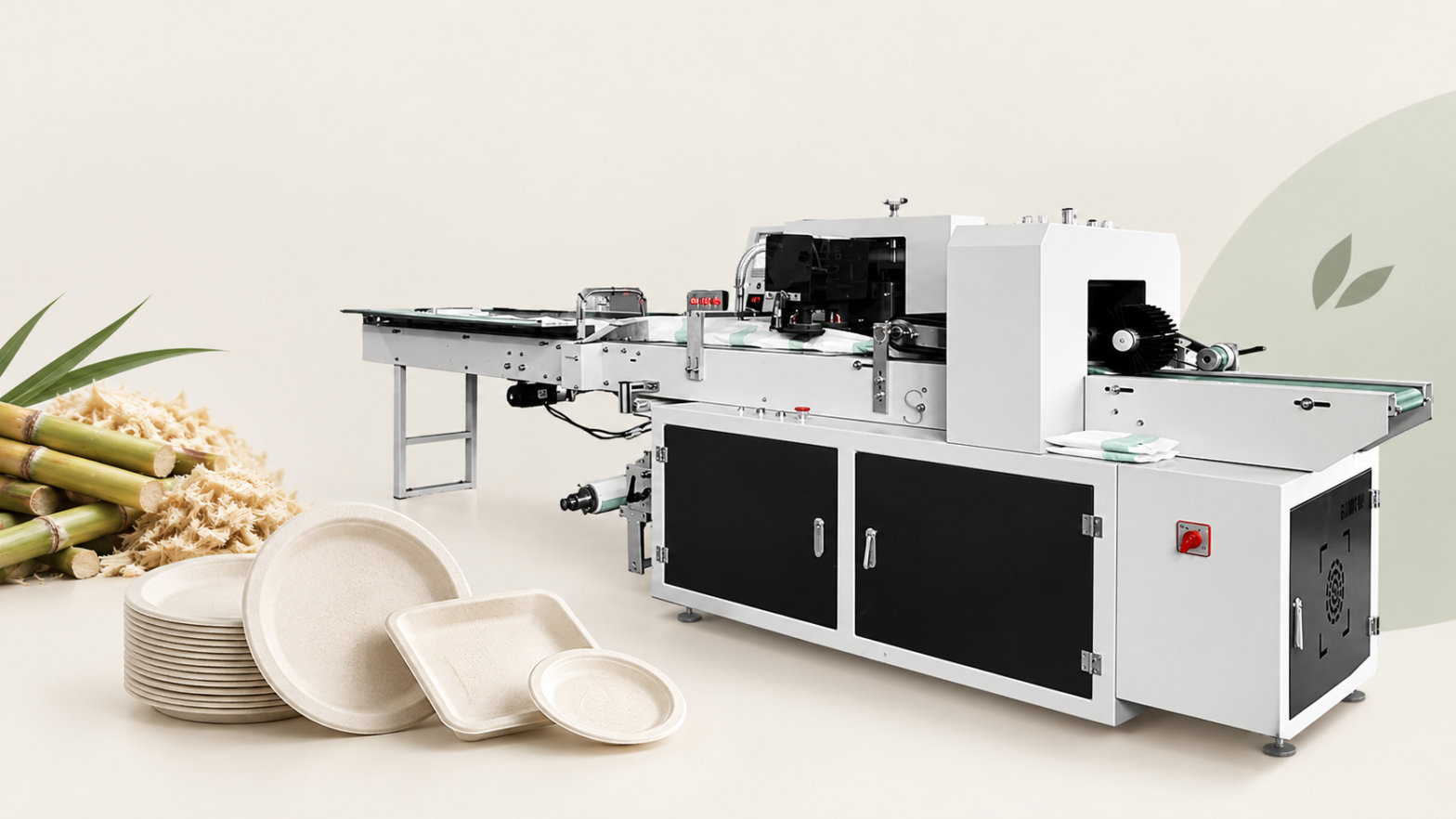
Quick answer: A sugarcane bagasse plate making machine turns leftover sugarcane fibre into moulded, compostable plates through pulping, wet forming, and hot pressing. In India, indicative prices run from about ₹8 lakh for semi-automatic units to ₹1.7 crore+ for fully automatic lines, with output of roughly 300 to 6,000+ plates per hour. Prices exclude GST, so always confirm with written supplier quotes.
Single-use plastic restrictions and rising demand for eco-friendly food packaging have made bagasse tableware one of the fastest-growing niches in Indian food service. Bagasse is the dry, fibrous residue left after sugarcane is crushed for juice or sugar. Instead of being burned, it can become sturdy, microwave-safe plates. If you plan to enter this business, choosing the right sugarcane plate making machine is the most important decision you will make.
This guide explains how the technology works, what capacity to expect, how pricing in rupees is structured, and what to check before you buy.
What Is a Sugarcane Waste Plate Making Machine?
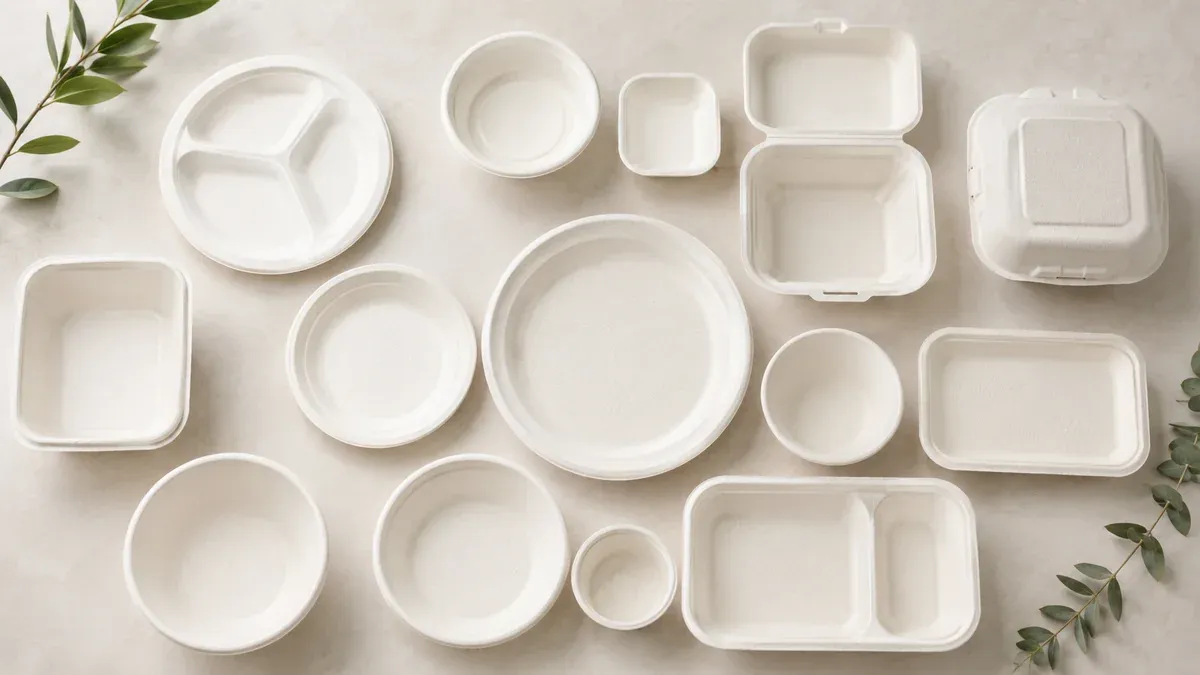
A sugarcane waste plate making machine is a set of equipment that converts bagasse into disposable plates, bowls, and trays. Depending on the supplier, the same equipment may be listed as a sugarcane plates machine, a bagasse tableware making machine, or a bagasse plates manufacturing machine. The names differ, but the core process is the same: wet bagasse pulp is formed into shape, then pressed and dried.
Why manufacturers choose bagasse:
- Compostable and plastic-free: it breaks down naturally after use.
- Heat and oil resistant: suitable for hot meals and microwave reheating.
- Low-cost raw material: an agricultural by-product from sugar mills and juice vendors.
- Regulatory tailwind: plastic and foam tableware face growing restrictions across India and export markets.
How a Bagasse Plate Making Machine Works
- Pulping: Bagasse is washed and mixed with water in a hydrapulper to form a slurry.
- Refining and additives: Water- and oil-proofing agents (preferably PFAS-free) are blended in.
- Wet moulding: A bagasse pulp molding machine vacuum-forms the slurry over a plate-shaped mould.
- Hot pressing: Heated dies press and dry the plate to its final strength and smooth finish.
- Trimming, sterilising, and packing: Edges are cut, plates are UV-sterilised, then counted and packed.
The bagasse pulp molding machine and its moulds largely decide plate thickness, finish, and strength.
Types of Machines, Capacity, and Price
| Machine type | Typical output (plates/hour) | Indicative price (INR) | Labour need | Best for |
|---|---|---|---|---|
| Semi-automatic | 300 – 1,000 | ₹8 – 35 lakh | High | Startups, pilot units |
| Fully automatic | 2,000 – 6,000+ | ₹50 lakh – 1.7 crore+ | Low | Scaled and export production |
Figures are indicative, exclude GST, and vary by plate size, cavities, and supplier.
A semi-automatic sugarcane plate making machine suits startups testing the market. A fully automatic bagasse plates manufacturing machine suits producers with steady bulk orders. When comparing any sugarcane plates machine, ask for output in plates per hour for a specific plate size (for example, a 9-inch plate), because capacity depends on the number of mould cavities, cycle time, and uptime.
Sugarcane Pulp Plate Making Machine Cost: What Affects the Price?
The sugarcane pulp plate making machine cost depends on several factors:
- Automation level: manual transfer versus robotic stacking and trimming.
- Capacity and cavities: more cavities mean higher output and a higher price.
- Mould quality and quantity: each plate shape needs its own tooling, and moulds for the bagasse pulp molding machine are a recurring cost.
- Heating method: electric, steam, or thermal-oil systems differ in price and running cost.
- Supplier origin and support: installation, training, and warranty are often priced in. Imported machines may add freight, customs duty, and currency risk.
Indicative budget components
| Item | Indicative range (INR) |
|---|---|
| Semi-automatic line | ₹8 – 35 lakh |
| Fully automatic line | ₹50 lakh – 1.7 crore+ |
| Extra moulds (per set) | Varies by size and shape |
| Boiler, power connection, water treatment | 10–25% of machine cost |
| GST on machinery | Extra, as applicable |
| Working capital (raw material, packing) | Plan for 2–3 months of operations |
A bagasse plate making machine quoted far below the market range usually means compromises in mould steel, heating, or automation, which show up later as defects and downtime.
Raw Material, Space, and Utilities
A sugarcane waste plate making machine consumes roughly 12–18 kg of dry fibre per 1,000 standard 9-inch plates (check against your own mould weights). Secure a reliable bagasse supply from a nearby sugar mill before you order, since fibre price and moisture vary by season. A sugarcane bagasse tableware making machine line also needs a covered production hall, three-phase power, clean water, a drying or storage area for fibre, and effluent handling, so plan roughly 500–2,000 sq m depending on scale. Check pollution control board consent requirements in your state before you begin.
Buying Guide: 9-Point Checklist
- Match capacity to demand: size the line to confirmed orders, not best-case forecasts.
- Inspect the forming system: ask for a live demo of the bagasse pulp molding machine.
- Check the automation level: more automation lowers labour cost but raises the investment.
- Confirm the heating source: pick one that is cost-effective where you operate.
- Verify mould quality: ask about steel grade, tolerance, and customisation.
- Ask about certifications: food-contact safety, compostability, and machine safety standards.
- Run a trial with your own bagasse: reputable suppliers of a sugarcane bagasse tableware making machine will do this.
- Review after-sales support: ask whether the bagasse plates manufacturing machine package includes training, spare parts, and remote or on-site service.
- Compare total cost: judge the full sugarcane pulp plate making machine cost, including moulds, utilities, GST, and installation, not just the ex-works price.
Is It Profitable? A Simple ROI View
Payback period = total investment ÷ monthly net profit. A well-run sugarcane plate making machine line earns on the gap between your selling price per plate and your cost per plate (fibre, power, labour, packing, rejects). Investors often ask whether the sugarcane pulp plate making machine cost can be recovered quickly, and the answer depends on utilisation. A sugarcane plates machine running two or three shifts with low rejection recovers its cost far faster than one running a single shift. Because a sugarcane waste plate making machine uses agricultural residue, it also supports sustainability claims that help win restaurant, catering, and export buyers.
Common Mistakes to Avoid
- Choosing on price alone: a cheap but unreliable machine costs more in downtime and rejected plates.
- Ignoring fibre supply: a sugarcane bagasse tableware making machine is only as good as its fibre quality and availability.
- Skipping the trial run: always test with your own raw material.
- Overlooking certification and testing: buyers increasingly ask for compostability and food-safety proof.
Frequently Asked Questions
What is a bagasse plate making machine?
It is production equipment that converts sugarcane bagasse pulp into compostable plates by moulding, hot pressing, and trimming.
How much does a sugarcane pulp plate making machine cost in India?
Indicatively, about ₹8–35 lakh for semi-automatic setups and ₹50 lakh–1.7 crore+ for fully automatic lines, before moulds, utilities, and GST. Get itemised quotes from several suppliers.
How many plates can a sugarcane plate making machine produce per hour?
Semi-automatic units typically produce about 300–1,000 plates per hour, and fully automatic lines can exceed 6,000, depending on cavities and plate size.
Can a bagasse pulp molding machine make bowls and trays too?
Yes. Changing the mould lets the same machine produce bowls, clamshells, trays, and cups.
What raw material does a sugarcane plates machine need?
Dry bagasse fibre, water, and small amounts of water- and oil-proofing additives.
Is a sugarcane bagasse tableware making machine suitable for small startups?
Yes. Semi-automatic models need lower investment and less space, which makes them a common starting point.
What is the difference between semi-automatic and fully automatic bagasse plates manufacturing machine lines?
Semi-automatic lines need manual loading and stacking and have lower output. Fully automatic lines handle forming, pressing, and trimming with minimal labour and higher, steadier output.
Conclusion
Choosing a sugarcane waste plate making machine comes down to matching capacity, automation, and budget to real demand. Whether you shortlist a sugarcane plate making machine for a pilot unit, a sugarcane plates machine for mid-scale output, a bagasse plates manufacturing machine for bulk contracts, or a sugarcane bagasse tableware making machine for export-grade tableware, request live demos, itemised quotes, and trial runs before committing. A reliable bagasse plate making machine, backed by steady fibre supply, is the foundation of a profitable and sustainable packaging business.
Ready to buy? Request a written quotation, a factory video demo, and a trial run with your own raw material before you decide.